Introduction
Understanding the MDD to MDR Changes is essential for regulatory compliance. The EU MDR 2017/745 replaced the Medical Device Directive (MDD 93/42/EEC) and the Active Implantable Medical Device Directive (AIMDD 90/385/EEC) on 26 May 2021. This was not a simple update. The MDR represents a fundamental restructuring of how medical devices are regulated in the European market.
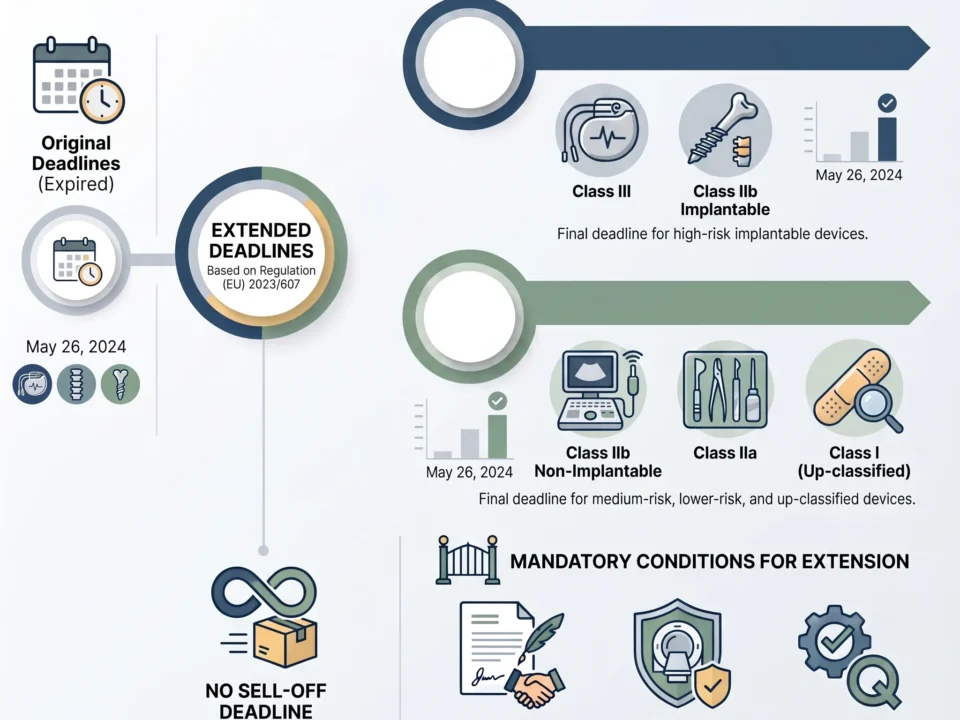
For manufacturers holding MDD certificates, the transition has been complex. The last MDD certificates expired on 26 May 2024 (with limited transition provisions under Regulation 2023/607 extending certain legacy devices to 2027 or 2028, provided specific conditions are met). New manufacturers face a higher, but clearer, regulatory barrier to entry.
Overview of MDD to MDR Changes
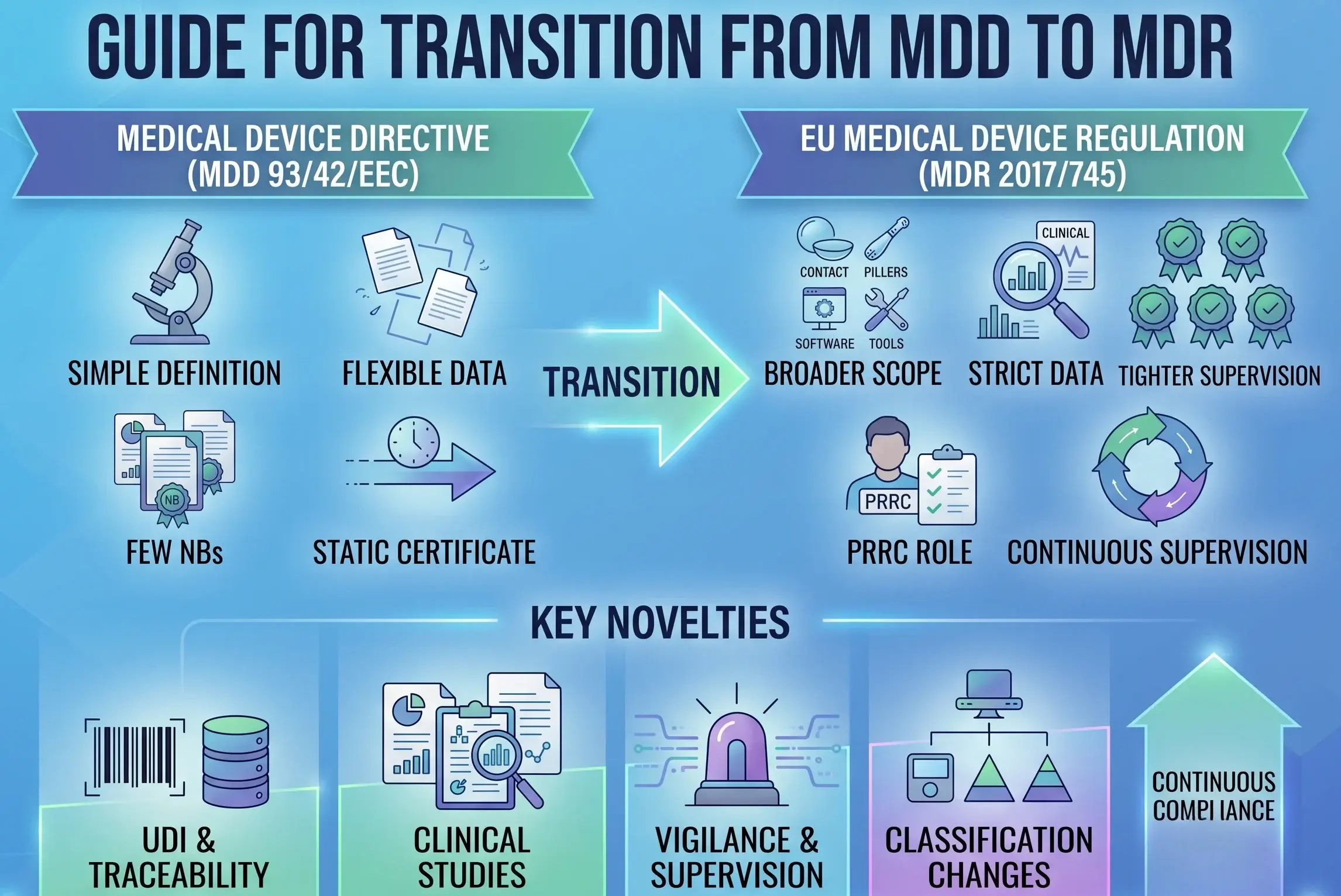
The ten changes below represent the most significant shifts between MDD and MDR. Each section includes the relevant legal references and practical implications for your regulatory strategy. For a full overview of the regulation, read the EU MDR Compliance Complete Guide and the EU MDR 2017/745 Comprehensive Overview.
1. Broader Definition of “Medical Device”
Relevant articles: MDR Art. 2(1), Annex XVI; MDD Art. 1(2)(a)
The MDR expands the definition of what qualifies as a medical device, one of the most impactful MDD to MDR Changes for manufacturers of borderline products. Under MDD, the definition focused on instruments, apparatus, appliances, or software used for diagnosis, prevention, monitoring, treatment, or alleviation of disease, injury, or disability. The core function had to be medical.
Under MDR Article 2(1), the definition now explicitly includes:
- Devices with no intended medical purpose but listed in Annex XVI (e.g., colored contact lenses, dermal fillers, liposuction equipment, laser hair removal devices)
- Software is now explicitly mentioned as a device category, removing any ambiguity about standalone software qualification
- Nanomaterials are recognized as a distinct material category requiring specific risk assessment
- Devices incorporating substances that are absorbed or metabolized by the body now fall more clearly under MDR scope
Practical impact: Products that previously escaped regulatory oversight, cosmetic devices, certain software applications, and combination products, must now demonstrate conformity. If your company manufactures any device listed in Annex XVI, you must comply with MDR requirements by the applicable transition deadline. Manufacturers of standalone medical software should review MDCG 2019-11 guidance on software qualification.
2. Enhanced Clinical Evidence Requirements, A Key MDD to MDR Changes
Relevant articles: MDR Art. 61(1)-(12); Annex XIV Part A; MDCG 2020-5; MDD Art. 3, Annex I
The shift from MDD’s “Essential Requirements” to MDR’s “General Safety and Performance Requirements” (GSPRs) in Annex I represents a significant tightening of clinical evidence expectations.
Under MDD, clinical evaluation requirements were broadly stated. Manufacturers could reference literature, historical data, and claims of equivalence with relative flexibility. The MDD required clinical data but did not prescribe the depth, methodology, or documentation standards found in MDR.
Under MDR Article 61, the requirements are substantially more demanding:
- Clinical evaluation must follow a systematic, documented process defined in Annex XIV Part A
- Equivalence claims are now tightly controlled. Per MDCG 2020-5, equivalence requires demonstrating that the predicate and new device share the same clinical, technical, and biological characteristics. Generic similarity is insufficient.
- Class III and implantable devices must undergo clinical investigations unless adequate existing clinical data justifies an exception (Article 61(4))
- Sufficient clinical evidence is required to demonstrate conformity with GSPRs, considering quantity, quality, and relevance
- Ongoing clinical evaluation throughout the device lifecycle, not just at initial certification
Practical impact: Manufacturers who previously relied on equivalence to MDD-certified devices must re-validate those claims under MDR standards. Many equivalence arguments that succeeded under MDD fail under the stricter MDCG 2020-5 framework. Budget for new clinical investigations if your device is Class III or implantable and lacks direct clinical data.
3. Strengthened Role of Notified Bodies
Relevant articles: MDR Art. 38-46; Regulation (EU) 2017/745 Chapter IV
The designation and oversight of Notified Bodies (NBs) under MDR is fundamentally different from MDD.
Under MDD, NBs were designated by national competent authorities with varying levels of scrutiny. The system led to inconsistent application of requirements across different NBs.
Under MDR, NBs must be designated jointly by the competent authority and the European Commission, following the process in Articles 38-46. This includes:
- Joint assessment teams including Commission and competent authority representatives
- Unannounced audits at least once every five years (Annex VII, Section 4.5.1)
- Stricter qualification criteria for NB personnel, technical expertise, clinical knowledge, and independence
- Mandatory rotation of auditors to prevent familiarity bias
- Subcontracting limitations, NBs retain full responsibility for any subcontracted activities
Capacity reality: As of 2026, over 40 NBs have been designated under MDR, compared to over 80 under MDD. This limited capacity creates bottlenecks. Designation cycles are longer. Manufacturers should secure NB contracts 12–18 months before their intended certification date. For current NBs, consult the European Commission’s NANDO database.
Practical impact: Plan for longer NB review times. Anticipate more questions during dossier review, MDR-level scrutiny is materially deeper than MDD. NBs are refusing incomplete applications under MDR, so submit only when your technical documentation is fully compliant.
4. Introduction of the Person Responsible for Regulatory Compliance (PRRC)
Relevant articles: MDR Art. 15
The PRRC requirement has no equivalent in MDD. Article 15 mandates that every manufacturer must have at least one qualified person responsible for regulatory compliance permanently and continuously at their disposal.
Requirements for the PRRC:
- Holds a diploma, certificate, or other evidence of formal qualification in law, medicine, pharmacy, engineering, or another relevant scientific discipline
- Has at least one year of professional experience in regulatory affairs or quality management for medical devices
- If no relevant diploma, at least four years of professional experience in regulatory affairs
The PRRC’s responsibilities include ensuring that:
- Conformity assessment procedures are carried out before devices are released
- Technical documentation and EU declarations of conformity are maintained
- Post-market surveillance obligations are fulfilled
- Reporting obligations under vigilance requirements are met
- Clinical evaluation documentation is current
For manufacturers with fewer than 50 employees and annual turnover below EUR 10 million, the PRRC may be contracted externally, but they must still be permanently and continuously available.
Practical impact: If you do not have a qualified person on staff, you must hire one or contract one under the small-company exemption. This is not optional. Documentation of the PRRC’s qualifications and availability must be part of your QMS. Authorized representatives must also have a PRRC at their disposal (Article 15(6)).
5. UDI System and Traceability
Relevant articles: MDR Art. 27-28; Annex VI Part C; Commission Implementing Regulation (EU) 2021/1178
The Unique Device Identifier (UDI) system is a new requirement under MDR. MDD had no equivalent traceability framework.
Under MDR Article 27, the UDI system consists of two components:
- UDI-DI: The device identifier, static information about the model or version
- UDI-PI: The production identifier, dynamic information including batch number, serial number, expiration date, manufacturing date
Key requirements:
- UDI must be placed on the device label and packaging (including all higher-level packaging)
- EUDAMED registration is required before a device can be placed on the market
- Basic UDI-DI is assigned at the device model level and links devices to their corresponding certificates and declarations
- UDI requirements apply according to the MDR implementation timelines and may also apply to certain legacy devices where applicable
The UDI must be recorded in EUDAMED under Article 28, which also includes:
- Registration of economic operators (manufacturers, authorized representatives, importers)
- Registration of devices and certificates
- Vigilance and clinical investigation data
UDI assignment and timeline strictly follow the rules detailed in MDR Article 27 and Annex VI Part C.
Practical impact: You need a UDI system integrated into your QMS. Labels must be redesigned. Data must be submitted to EUDAMED. The Basic UDI-DI concept is new and often misunderstood, ensure your regulatory team understands the distinction between UDI-DI and Basic UDI-DI.
6. Expanded Scope of Post-Market Surveillance (PMS)
Relevant articles: MDR Art. 83-86; Annex III
MDD required minimal post-market surveillance. Under Article 83 of the MDR, PMS is now a structured, mandatory, and documented system for every device class.
Under MDD, PMS obligations were limited to a general requirement in Annex IX Section 2 for Class IIa and higher devices to “establish and keep up to date a systematic procedure to review experience gained from devices in the post-production phase.” No specific documentation format or periodic review schedule was prescribed.
Under MDR, the PMS system (Article 83-86) requires:
- A PMS plan (Article 84) specifying proactive and systematic processes for collecting and analyzing data
- A PMS report (Article 85) updated when necessary for Class I devices
- Periodic Safety Update Report (PSUR) (Article 86):
- Class IIa: at least every two years
- Class IIb: at least annually
- Class III: at least annually
- Class III/implantables: PSUR must be submitted to the NB
- Annex III defines the minimum content of PMS documentation, including information on serious incidents, trend reports, corrective actions, and feedback from vigilance activities
Practical impact: Your PMS system must be fully documented from the start, not built retrospectively. For Class III and implantable devices, PSURs must be submitted through EUDAMED. The PSUR format and content must comply with MDCG 2022-21 guidance.
7. Stricter Requirements for Clinical Investigations
Relevant articles: MDR Art. 62-82; Annex XV; Regulation (EU) No 536/2014
MDR introduces significantly more detailed requirements for clinical investigations compared to MDD. Annex XV specifies the detailed content requirements for clinical investigation plans and investigator’s brochures.
Under MDD, clinical investigation requirements were outlined in Annex VIII, which ran approximately three pages. Under MDR, Annex XV runs over 30 pages with precise specifications for:
- Clinical Investigation Plan (CIP): Must include justification, objectives, design, methodology, monitoring, data management, statistical considerations, and provisions for vulnerable populations
- Investigator’s Brochure (IB): Comprehensive document covering all relevant preclinical and clinical data, device description, and risk-benefit analysis
- Informed consent requirements are expanded for specific populations:
- Minors (Article 63)
- Incapacitated subjects (Article 64)
- Pregnant and breastfeeding women (Article 65)
- Emergency situations (Article 68)
- Sponsor responsibilities are codified in Article 69-71, including insurance, transparency obligations, and reporting of adverse events
- Clinical investigation application requires submission to the competent authority and ethics committee in each member state
Practical impact: Clinical investigation timelines are longer under MDR. Budget accordingly. The informed consent requirements for vulnerable populations are more stringent, you may need to adjust study designs. The CIP must meet the full Annex XV requirements, or your application will be rejected.
8. Enhanced Vigilance and Market Surveillance
Relevant articles: MDR Art. 87-100
The vigilance system under MDR is more structured, transparent, and faster than under MDD.
Under MDD, serious incident reporting was required but timelines were less strict, and there was no systematic trend reporting obligation. Market surveillance was the responsibility of individual member states with limited EU-level coordination.
Under MDR:
- Serious incident reporting (Article 89): Manufacturers must report serious incidents involving devices available on the EU market
- Reporting timelines (Article 89):
- Serious public health threat: within 2 days
- Death or unanticipated serious deterioration: within 10 days
- Other serious incidents: within 15 days
- Trend reporting (Article 88): Statistically significant increase in frequency or severity of non-serious incidents must be reported
- Periodic Summary Report (Article 87(9)): For similar incidents reported over a period
- Periodic Safety Update Report (PSUR): Integrated with PMS obligations
- Market surveillance (Articles 92-100): Competent authorities have enhanced powers including product recall, withdrawal, and restriction of availability
- European Commission oversight: The Commission coordinates market surveillance through the Medical Device Coordination Group (MDCG) and can issue implementing measures
Practical impact: Your vigilance system must meet the stricter MDR timelines. If you handle serious incident reporting manually or semi-manually, automate it. Trend reporting is a new obligation, ensure your PMS data analysis includes statistical trend detection.
9. Changes to Classification Rules
Relevant articles: MDR Annex VIII; MDD Annex IX
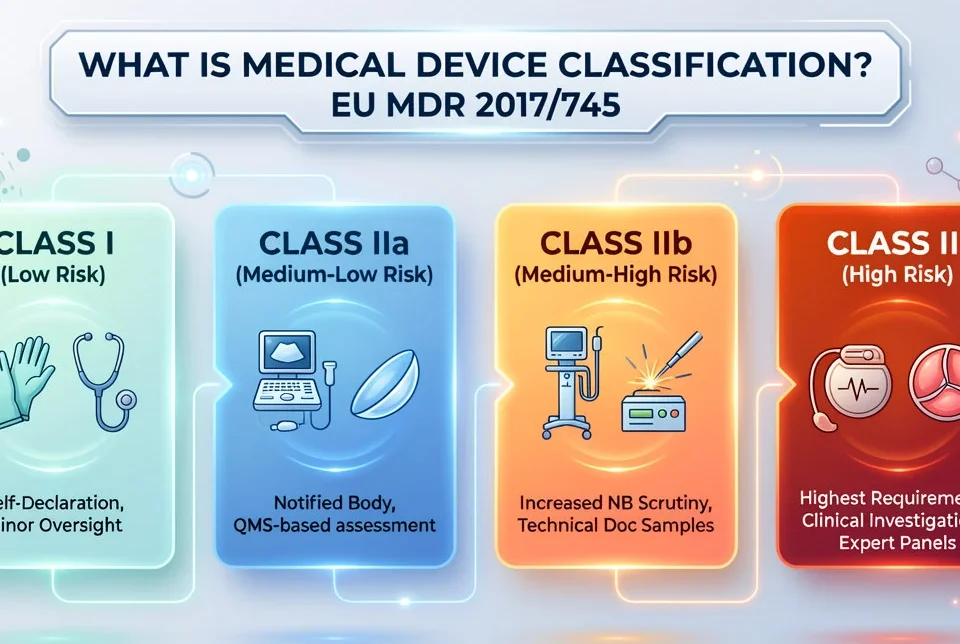
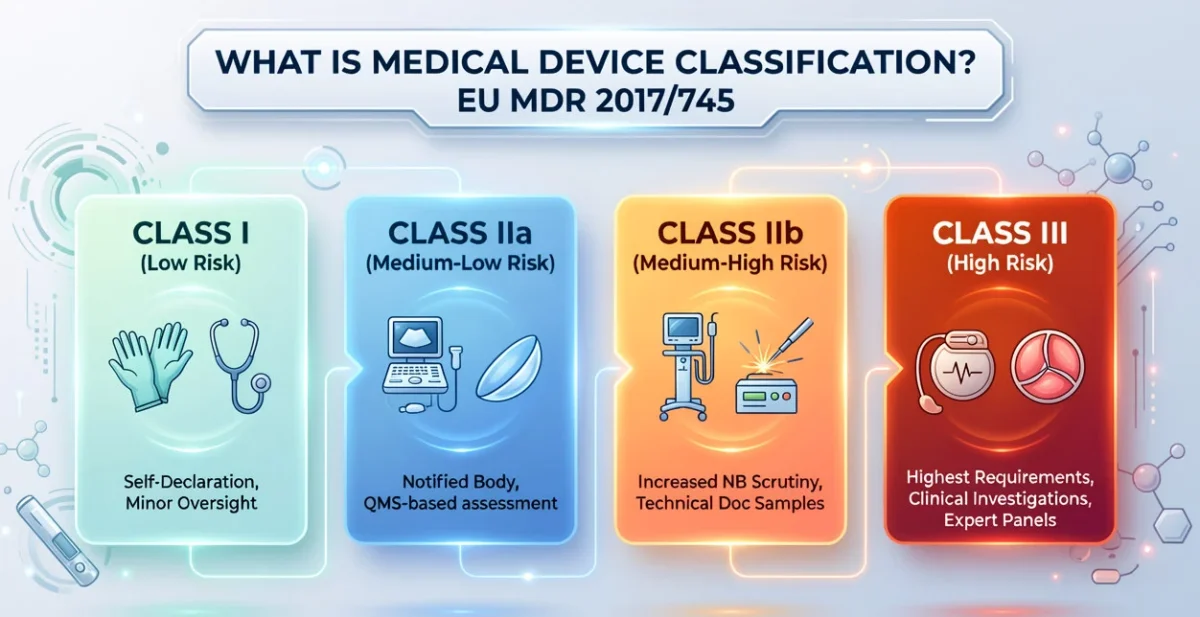
The classification framework under MDR Annex VIII contains significant changes from MDD Annex IX. Several device types have been reclassified upward, meaning higher compliance burdens.
Key classification changes:
- Software: Standalone software that monitors physiological processes now defaults to Class IIa or higher depending on clinical impact. Under MDD, most standalone software was Class I or IIa. MDCG 2019-11 provides detailed classification rules for software.
- Nanomaterials: Devices incorporating nanomaterials may be classified as Class IIb or III depending on exposure level and internalization risk (Rule 19, Annex VIII)
- Substances: Devices incorporating substances that are systemically absorbed and metabolized are now Class III (Rule 21)
- Surgical instruments: Reusable surgical instruments are now Class I (sterile) or higher, with more specific sub-classifications
- Instruments intended for direct contact with the central circulatory system or central nervous system are now Class III
- Active devices for administering medicinal products are Class IIb or higher depending on the mode of administration and risk
Practical impact: Re-audit your device classification under MDR Annex VIII. Some devices that were Class I under MDD may be Class IIa or higher under MDR. Classification determines your conformity assessment route, misclassification leads to certification delays and compliance gaps.
Summary of classification rules for software (simplified):
- Rule 11a: Software controlling a device or influencing the use of a device, same class as the device
- Rule 11b: Software for diagnosis or therapeutic decisions, Class IIa or higher
- Rule 11c: Software for monitoring physiological processes, Class IIa
- Rule 11d: Software not intended for the above, Class I
10. Lifecycle Approach and Continuous Evidence Generation
Relevant articles: MDR Art. 10(2), 83-86, 61(11); Annex XIV Part B
The most fundamental conceptual shift in MDR is the move from point-in-time certification to a continuous lifecycle approach.
Under MDD, once a device received CE marking, the manufacturer’s primary ongoing obligation was to report serious incidents and maintain the QMS. Clinical evaluation was typically done at initial certification and updated only if significant new information emerged.
Under MDR, compliance is never “finished.” Article 10(2) requires manufacturers to “establish, implement, document and maintain a risk management system” throughout the entire lifecycle of the device.
This lifecycle approach includes:
- Post-Market Clinical Follow-up (PMCF) is mandatory for all device classes under Annex XIV Part B. PMCF must be conducted proactively to confirm safety and performance throughout the device’s lifetime
- Clinical Evaluation Report (CER) must be updated at least annually (for Class III and implantables) or as triggered by new information
- PMS data feeds back into clinical evaluation, creating a continuous loop of evidence generation and assessment
- Significant changes to the device or its intended purpose require a new conformity assessment (Article 120 transition provisions have specific rules on what constitutes a significant change for legacy devices)
- Annual documentation review is no longer optional, the CER, PSUR, PMS report, and risk management file must be kept current
Practical impact: Regulatory compliance is now a permanent operational function, not a project with an end date. You need systematic processes for ongoing data collection, analysis, and documentation updating. Regulatory affairs teams must be embedded in product lifecycle management.
Impact on Manufacturers
Manufacturers with MDD Certificates
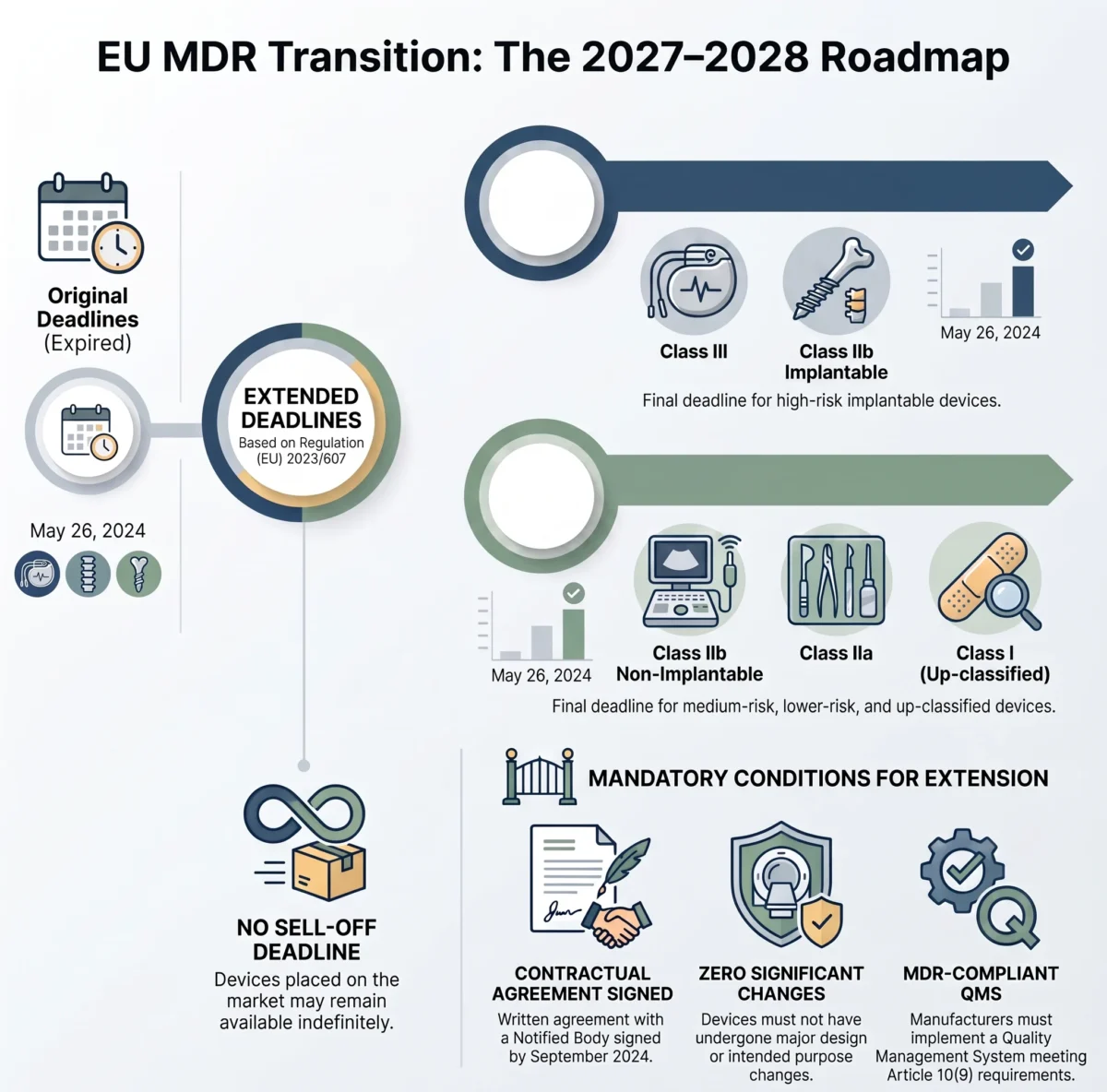
The transitional provisions in Article 120 allow devices with valid MDD certificates to remain on the market until 31 December 2027 (Class I and lower-risk devices) or 31 December 2028 (higher-risk devices), provided:
- The MDD certificate was valid on 26 May 2021
- There are no significant changes in design or intended purpose
- The device continues to meet MDR requirements for PMS, vigilance, market surveillance, and registration of economic operators
Manufacturers relying on transition periods must still comply with MDR provisions related to:
- Post-market surveillance and vigilance (Articles 83-86, 87-100)
- Registration of economic operators and devices in EUDAMED (Articles 29-31)
- UDI requirements (Articles 27-28)
Critical gap: MDD certificates themselves cannot be renewed or recertified. Any new device or significant change must go through full MDR conformity assessment.
New Manufacturers Entering the Market
New manufacturers must comply with full MDR requirements from day one. The barrier to entry is higher than under MDD, but the clearer framework provides more predictable regulatory pathways.
Key considerations:
- No grandfathering: MDR applies in full to new submissions
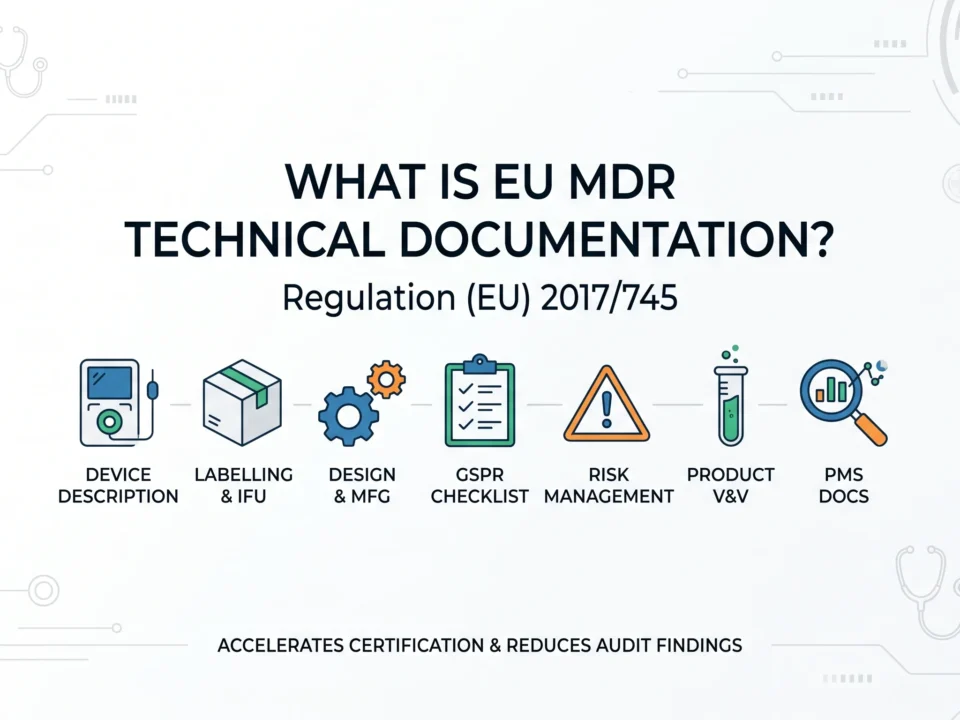
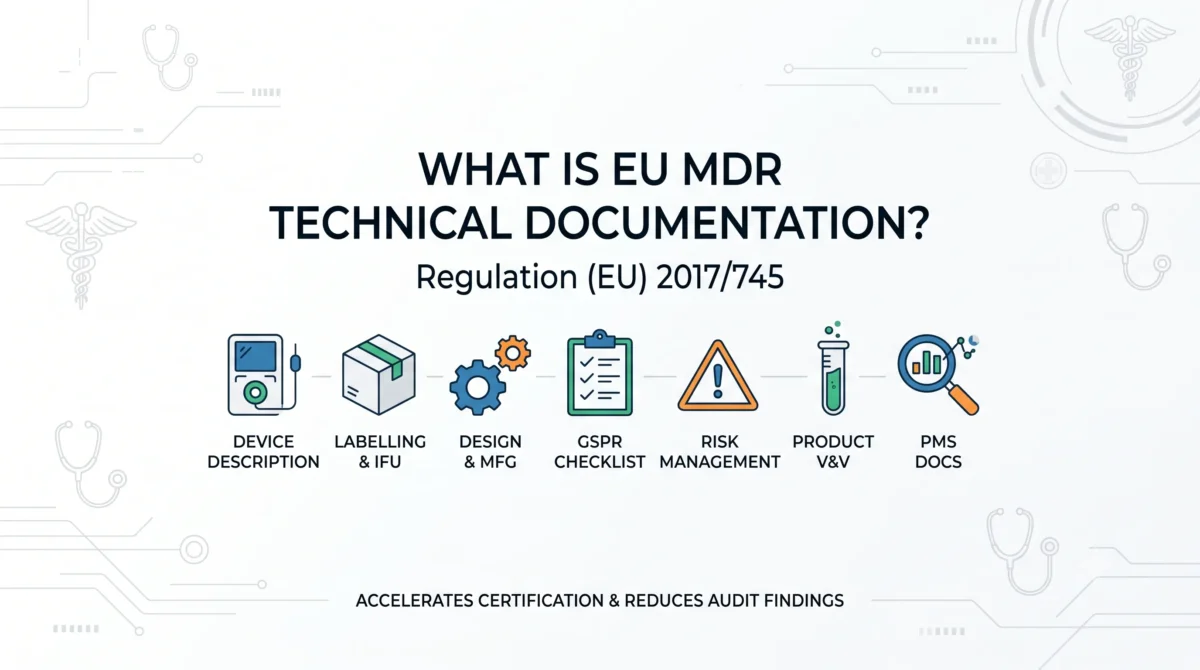
- Higher documentation burden: Technical documentation must address all GSPRs in Annex I
- More clinical evidence: Prepare for clinical investigations or robust equivalence justifications
- Longer timelines: Budget 18–24 months from application to CE marking for Class IIa and higher
Transition Deadlines (Current State, 2026)
As of 2026, all MDD certificates have expired. The MDR transition periods are now in effect for legacy devices:
| Device Class | MDD Certificate Status | MDR Compliance Deadline |
| Class III and Class IIb implantables (excluding sutures) | Expired 26 May 2024 | Must comply by 31 Dec 2027 if transition conditions met |
| Class IIb non-implantable, Class IIa | Expired 26 May 2024 | Must comply by 31 Dec 2028 if transition conditions met |
| Class I (sterile, measuring, reusable surgical) | Expired 26 May 2024 | Must comply by 31 Dec 2028 if transition conditions met |
| Class I (non-sterile, no measuring function) | MDD self-declaration not valid after May 2021 | Full MDR compliance required |
Manufacturers that missed the transition window or whose MDD certificate expired before a transition agreement was in place must stop placing devices on the market and pursue new MDR certification.
How MDRcert Supports Your Transition
Transitioning from MDD to MDR is complex. MDRcert provides end-to-end support for manufacturers at every stage of the process.
Gap analysis: We identify the specific gaps between your current MDD-level documentation and full MDR compliance. This includes technical documentation review, clinical evaluation assessment, and QMS gap analysis.
Technical documentation: We help you build complete MDR-compliant technical documentation covering all GSPRs in Annex I, including the Summary of Safety and Clinical Performance (SSCP) for Class III and implantable devices.
Clinical evaluation: Our clinical team supports CER development, equivalence justification, literature reviews, PMCF planning, and clinical investigation design.
QMS implementation: We align your ISO 13485 QMS with MDR requirements, including PMS, vigilance, and UDI integration.
Contact our team to discuss your specific transition needs. Visit our services page for a full list of offerings, or explore our MDR consulting services for dedicated transition support.
Related Content
- EU MDR Compliance Complete Guide, Foundational overview of the regulation
- EU MDR 2017/745 Comprehensive Overview, Structure and scope of the regulation
- Services, MDRcert service offerings
- MDR Consulting, Dedicated MDR transition support
References
- Regulation (EU) 2017/745 of the European Parliament and of the Council of 5 April 2017 on medical devices. https://eur-lex.europa.eu/legal-content/EN/TXT/?uri=CELEX:32017R0745
- Council Directive 93/42/EEC of 14 June 1993 concerning medical devices. https://eur-lex.europa.eu/legal-content/EN/TXT/?uri=CELEX:31993L0042
- MDCG 2020-5, Guidance on Clinical Evaluation, Equivalence. https://ec.europa.eu/docsroom/documents/45685
- MDCG 2019-11, Guidance on Qualification and Classification of Software. https://ec.europa.eu/docsroom/documents/34362
- MDCG 2021-24, Guidance on Classification of Medical Devices under MDR. https://ec.europa.eu/docsroom/documents/42992
- MDCG 2022-21, Guidance on Periodic Safety Update Report (PSUR). https://ec.europa.eu/docsroom/documents/50767
- European Commission, NANDO Database for Designated Notified Bodies. https://ec.europa.eu/growth/tools-databases/nando/
- Regulation (EU) No 536/2014 on clinical trials, relevant for cross-reference with MDR clinical investigation provisions. https://eur-lex.europa.eu/legal-content/EN/TXT/?uri=CELEX:32014R0536
- MDCG 2019-7, Guidance on the Person Responsible for Regulatory Compliance (PRRC). https://ec.europa.eu/docsroom/documents/35702- European Commission – MDCG Endorsed Guidance: https://ec.europa.eu/health/medical-devices-sector/new-regulations/guidance-mdcg-endorsed-documents-and-other-guidance_en
- EUR-Lex – MDR Transitional Provisions: https://eur-lex.europa.eu/legal-content/EN/TXT/?uri=CELEX:02017R0745-20170505
Frequently Asked Questions (FAQ)
What are the most critical changes from MDD to MDR?
The ten critical changes include a broader definition of medical device, enhanced clinical evidence requirements, strengthened notified body oversight, the new PRRC role, UDI system, expanded post-market surveillance, stricter clinical investigation rules, enhanced vigilance, updated classification rules, and a continuous lifecycle approach to compliance.
How have clinical evidence requirements changed from MDD to MDR?
Under MDR Article 61, clinical evaluation must follow a systematic process defined in Annex XIV Part A. Equivalence claims are now tightly controlled under MDCG 2020-5, and class III and implantable devices must normally undergo clinical investigations unless adequate existing clinical data justifies an exception.
How has notified body scrutiny increased under the MDR?
Notified Bodies under MDR must be jointly designated by competent authorities and the European Commission through joint assessment teams. They face stricter qualification criteria, mandatory auditor rotation, unannounced audits every five years, and subcontracting limitations, over 40 NBs designated under MDR compared to over 80 under MDD.
What is the UDI system and why was it introduced under the MDR?
The Unique Device Identifier system under Article 27 consists of a UDI-DI identifying the device model and a UDI-PI identifying the production batch. MDD had no equivalent traceability framework, and the UDI system was introduced to improve supply chain traceability, recall effectiveness, and patient safety.
What is the implant card requirement under the MDR?
Article 18 introduces the implant card, which must be provided to every patient receiving an implantable device. The card contains the device name, serial number, UDI, manufacturer contact details, warnings, expected lifetime, and potential risks, enabling patients to track their implanted devices and receive safety information.