
What Is Technical Documentation for EU MDR?
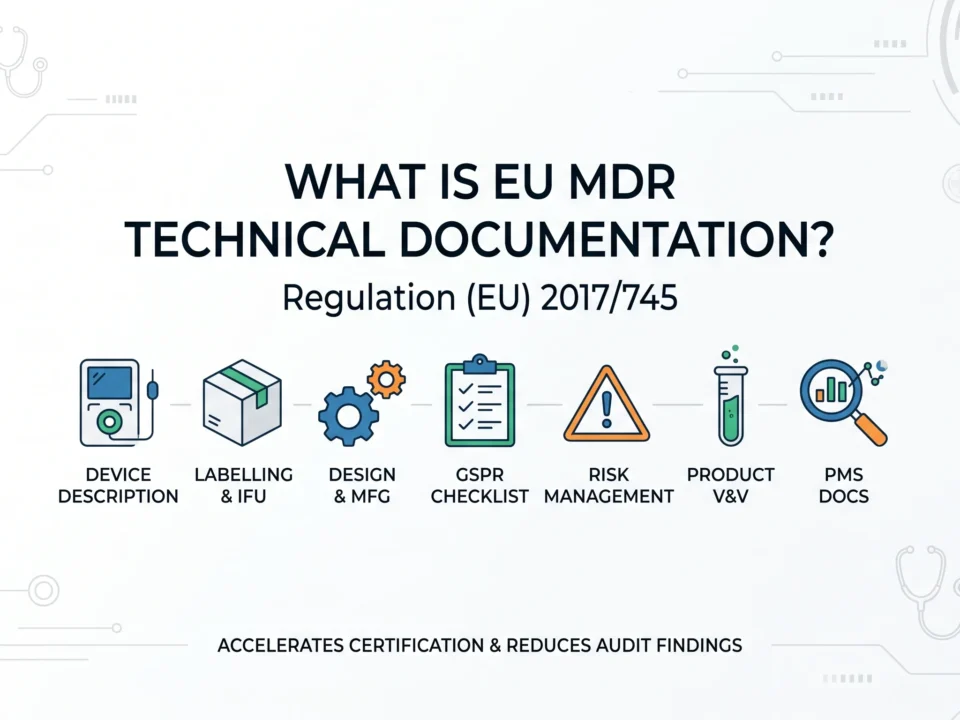
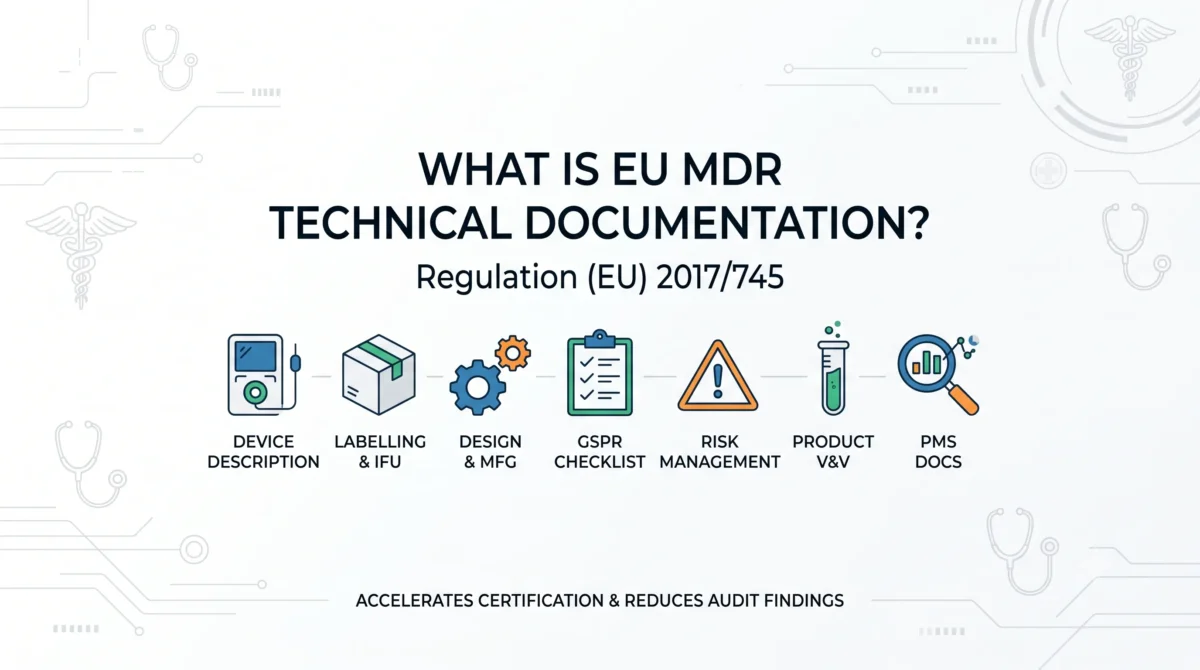
Technical Documentation for EU MDR is the complete set of documents and records that demonstrate a medical device conforms to all applicable requirements of Regulation (EU) 2017/745. The requirements for technical documentation are defined in Annex II (Technical Documentation) and Annex III (Post-Market Surveillance) of the MDR.
Technical documentation is the foundation of the conformity assessment process. Notified Bodies review the technical documentation to verify conformity, and competent authorities may request it for market surveillance purposes. Well-structured, complete technical documentation accelerates certification timelines and reduces audit findings.
For an overview of the full MDR framework, read the EU MDR Compliance Complete Guide. For the clinical evaluation component, see the Clinical Evaluation Report MDR guide.
Annex II Structure
Annex II of the MDR specifies the content of technical documentation. It is divided into six sections.
Section 1: Device Description and Specification
This section must cover:
- Device identification: Trade name, model, catalogue numbers, Basic UDI-DI
- Intended purpose: The medical indication, target population, anatomical site, intended user, and clinical benefit
- Device description: Operating principle, mechanism of action, materials in contact with body, critical functional elements
- Variants and accessories: Description of all device configurations and how they differ
- Reference to previous and similar generations: Description of the device’s own previous generations, and of similar devices currently available on the market, used to support state-of-the-art comparison and equivalence claims in the clinical evaluation
Section 2: Information Supplied by the Manufacturer
This section references the labelling and instructions for use (IFU) as required by Annex I, Section 23 (23.1–23.4). Include:
- Labels (device, packaging, transport/storage)
- Instructions for use in all applicable languages
- Implant card (for implantable devices)
- Information for patients and healthcare professionals
- Promotional materials and claims
Section 3: Design and Manufacturing
This section covers the design and production process:
- Design stages: Conceptual design, design inputs/outputs, design reviews, verification and validation
- Manufacturing processes: Process flow, process validation, critical process parameters, production specifications
- Facilities and equipment: Manufacturing locations, key equipment, cleanroom classifications (if applicable)
- Supplier management: Critical suppliers, raw material specifications, supplier audits
Section 4: General Safety and Performance Requirements (GSPR)
This section must demonstrate conformity with each applicable GSPR in Annex I. Use a GSPR checklist that:
- Lists every GSPR requirement applicable to the device
- References the specific document where conformity is demonstrated (design output, test report, risk management record)
- Provides a brief explanation of how the requirement is met
- Identifies which GSPR requirements are not applicable, with justification
For detailed GSPR guidance, see the General Safety and Performance Requirements guide.
Section 5: Benefit-Risk Analysis and Risk Management
This section contains the benefit-risk analysis and risk management file per ISO 14971:
- Risk management plan
- Risk analysis records (FMEA, FTA, PHA)
- Risk evaluation
- Risk control measures and verification
- Residual risk evaluation
- Overall residual risk evaluation and risk-benefit analysis
- Risk management report
For detailed risk management guidance, see the ISO 14971 Risk Management guide.
Section 6: Product Verification and Validation
This section contains product verification and validation documentation per Annex II Section 6, including:
- Clinical evaluation documentation per Article 61 and Annex XIV Part A (Clinical Evaluation Plan, Clinical Evaluation Report, clinical data, equivalence documentation)
- Biological evaluation (biocompatibility per ISO 10993)
- Stability documentation (shelf life, packaging, shipping validation)
- Performance and safety verification
Annex III, Post-Market Surveillance
Annex III defines the PMS system documentation that must be part of or referenced by the technical documentation:
- PMS Plan: Methods for proactive and reactive data collection, analysis methods, trigger criteria
- PMS Report (class I) or PSUR (class IIa, IIb, III): Periodic safety and performance updates
- PMCF Plan and PMCF Evaluation Report: Clinical follow-up documentation
- Vigilance records: Serious incident reports, FSCA records, trend reports
- Complaint records and trends: Analysis of post-market feedback
For detailed PMS guidance, see the Post-Market Surveillance MDR guide.
Technical Documentation Organization
A well-organised technical documentation structure makes Notified Body review efficient. Recommended structure:
Physical or Electronic Folder Structure
“`
Technical Documentation, [Device Name]
├── 1. Device Description and Specification
│ ├── 1.1 Device Identification
│ ├── 1.2 Intended Purpose and Indications
│ ├── 1.3 Device Description and Operating Principle
│ ├── 1.4 Variants and Accessories
│ └── 1.5 Device History
├── 2. Labelling and IFU
│ ├── 2.1 Device Labels
│ ├── 2.2 Instructions for Use
│ ├── 2.3 Implant Card
│ └── 2.4 Promotional Materials
├── 3. Design and Manufacturing
│ ├── 3.1 Design History File
│ ├── 3.2 Manufacturing Specifications
│ ├── 3.3 Process Validation
│ └── 3.4 Supplier Management
├── 4. GSPR Checklist
│ └── 4.1 Conformity with Annex I
├── 5. Risk Management
│ ├── 5.1 Risk Management Plan
│ ├── 5.2 Risk Analysis
│ ├── 5.3 Risk Control
│ └── 5.4 Risk Management Report
├── 6. Product Verification and Validation
│ ├── 6.1 Clinical Evaluation
│ ├── 6.2 Biological Evaluation
│ ├── 6.3 Stability Documentation
│ └── 6.4 Performance Verification
├── 7. PMS Documentation
│ ├── 7.1 PMS Plan
│ ├── 7.2 PMS Report / PSUR
│ ├── 7.3 PMCF Plan and Report
│ └── 7.4 Vigilance Records
└── 8. Declarations and Certificates
├── 8.1 EU Declaration of Conformity
├── 8.2 Certificate of Conformity
└── 8.3 Certificates from Sub-Suppliers
“`
Technical Documentation for Class I Devices
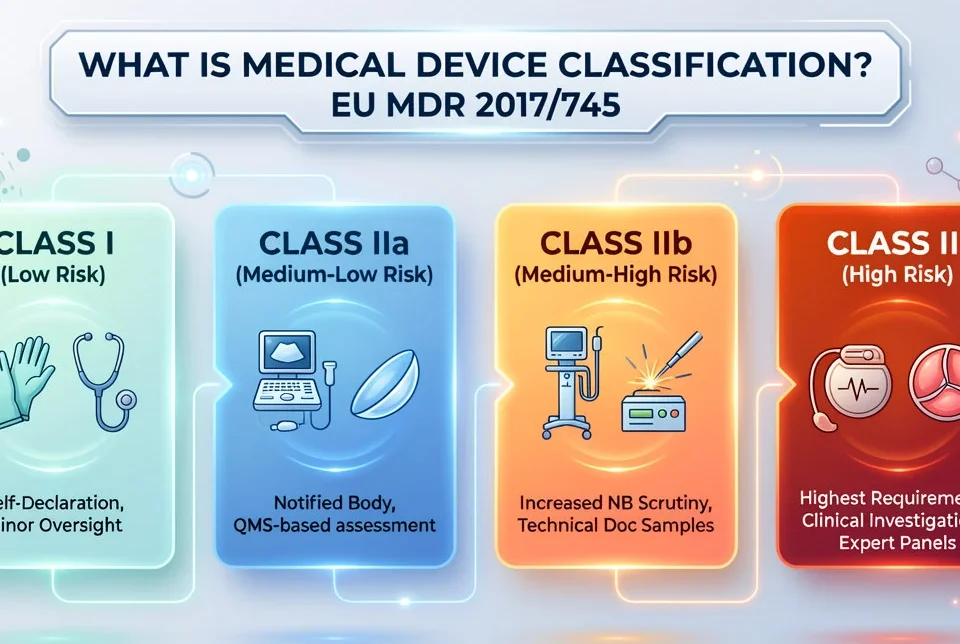
Class I devices that self-declare conformity (excluding those that are sterile, have a measuring function, or are reusable surgical instruments – Class Is, Im, Ir) do not require Notified Body review, but complete technical documentation must still exist. The documentation should follow the same Annex II structure at a depth proportionate to the device risk.
Technical Documentation for Legacy Devices
Devices transitioning from MDD certification must upgrade their technical documentation to meet MDR requirements. Key areas requiring enhancement:
- Clinical evaluation: MDD CERs often lack the depth required by Article 61 and MDCG guidance
- GSPR checklist: MDD Essential Requirements checklist must be updated to MDR GSPR checklist
- Risk management: ISO 14971 updates and enhanced linkage to clinical evaluation
- PMS documentation: PMS system must be expanded to meet Articles 83-86 requirements
- UDI information: Basic UDI-DI and UDI-DI must be added
- PRRC documentation: Evidence of PRRC qualification and designation
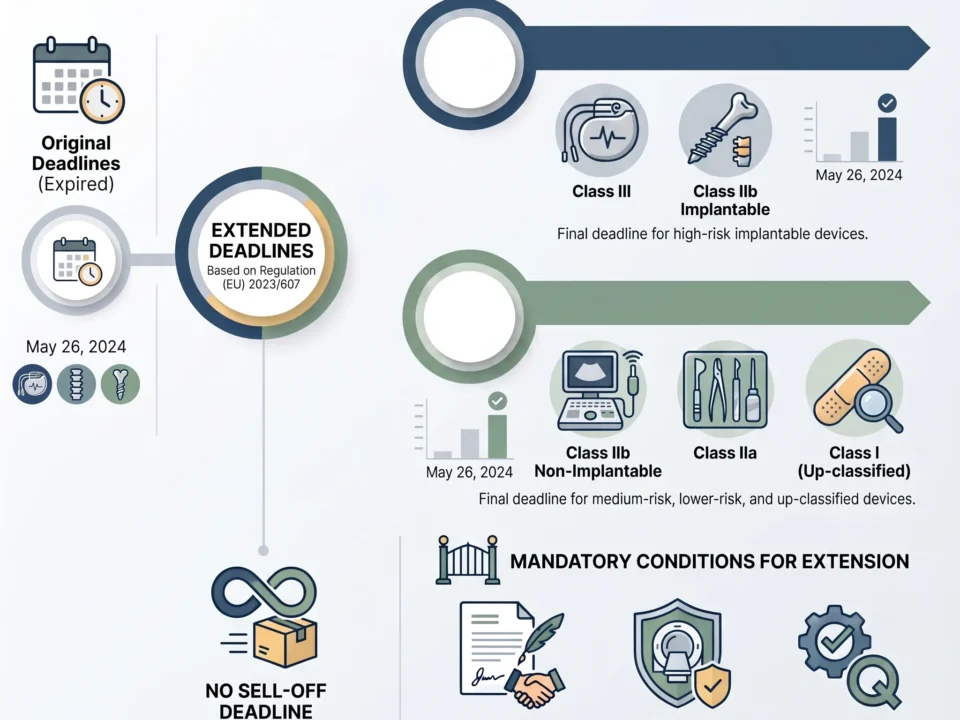
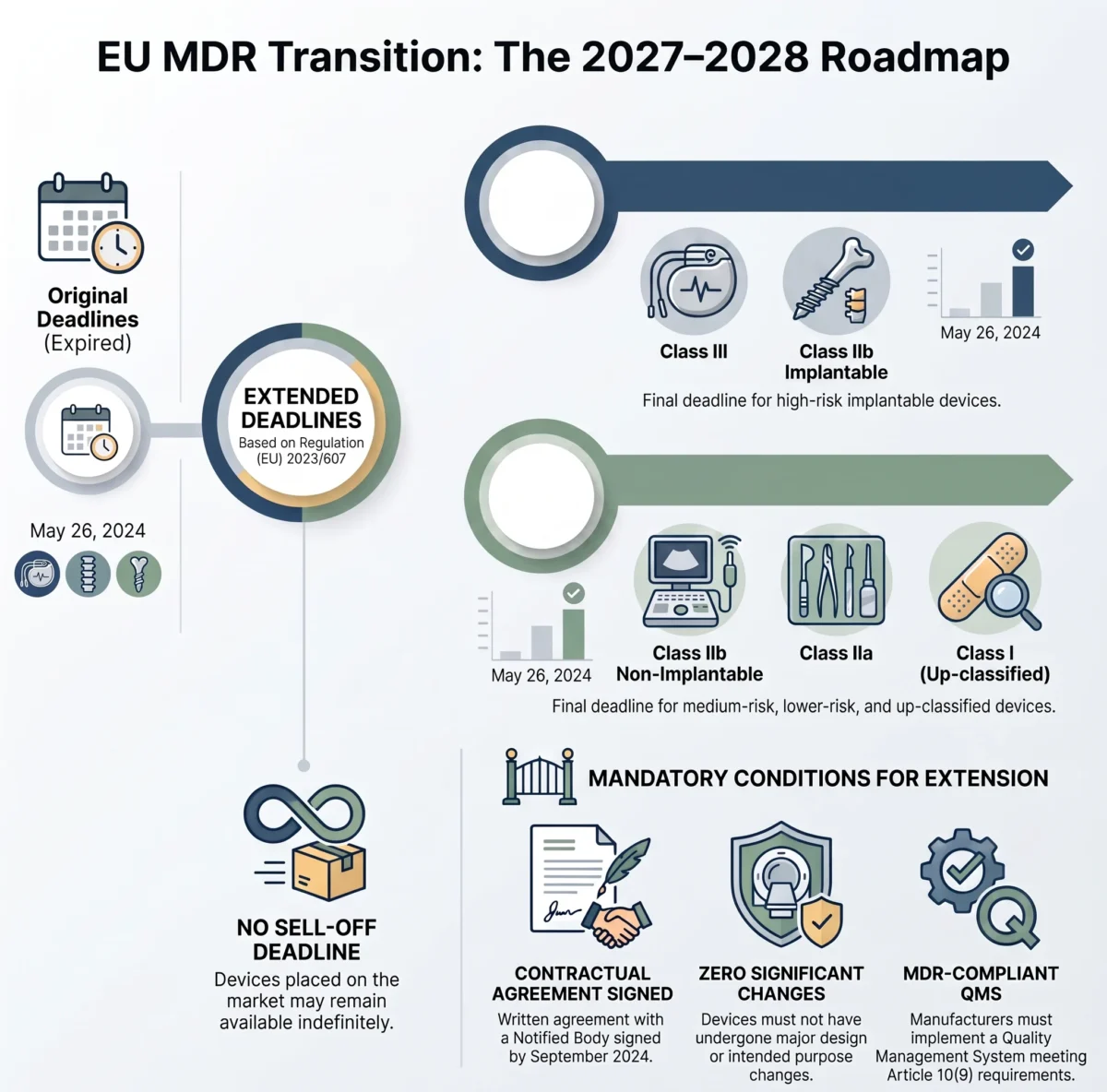
Note: Under Regulation (EU) 2023/607, the transition periods for legacy devices have been extended (up to 2027 or 2028, depending on the risk class), provided that the manufacturer implements an MDR-compliant QMS and formally lodges an application with a Notified Body by the stipulated deadlines.
Common Technical Documentation Findings
Notified Body reviews of technical documentation consistently identify the following deficiencies:
Insufficient Clinical Data
The clinical evaluation lacks sufficient clinical data, especially for higher-class devices. The CER does not adequately address state-of-the-art or provide a robust risk-benefit analysis.
Weak GSPR Checklist
The GSPR checklist is incomplete or contains only generic statements. Each requirement must be specifically addressed with document references and a clear explanation.
Missing PMS Documentation
The PMS Plan and PSUR are absent or insufficient. Notified Bodies expect a complete PMS system before issuing certificates.
Inadequate Risk Management Integration
The risk management file does not reference clinical evaluation findings, and the clinical evaluation does not reference specific hazards from the risk analysis.
Documentation Not Updated
Technical documentation must reflect the current state of the device. Changes in design, materials, manufacturing processes, or clinical evidence must be documented through a change control process.
Summary
Technical Documentation for EU MDR as defined in Annexes II and III is the foundation of the conformity assessment process. Key success factors include:
- Complete and accurate device description and specification
- GSPR checklist with specific document references for each requirement
- Risk management file integrated with clinical evaluation
- Clinical evaluation documentation per Article 61 and Annex XIV
- PMS system documentation (PMS Plan, PSUR, PMCF Plan)
- Well-organised folder structure for efficient Notified Body review
External resources:
- EUR-Lex MDR Annex II and III
- MDCG 2019-9 Summary of Safety and Clinical Performance (SSCP) Guidance
- European Commission MDR Guidance
Contact our team for technical documentation support →
Frequently Asked Questions (FAQ)
What are the six sections of Annex II technical documentation?
Annex II requires six sections: device description and specification (including reference to previous and similar generations), information supplied by the manufacturer (labelling and IFU), design and manufacturing information, the GSPR checklist, benefit-risk analysis and risk management, and product verification and validation — the latter covering clinical evaluation (Article 61, Annex XIV Part A), biological evaluation, stability, and performance/safety verification. Each section must be complete and cross-referenced for Notified Body review.
What is the difference between Annex II and Annex III of the MDR?
Annex II defines the technical documentation requirements for demonstrating device conformity, including device description, GSPR checklist, risk management, and clinical evaluation. Annex III specifies the post-market surveillance documentation requirements, including the PMS Plan, PSUR or PMS Report, PMCF Plan and Evaluation Report, vigilance records, and complaint analysis.
How should manufacturers organise their technical documentation for audit?
A well-organised structure includes folders for device description, labelling, design and manufacturing, GSPR checklist, risk management, clinical evaluation, PMS documentation, and declarations and certificates. Each section should contain clearly labelled documents with version control, and cross-references should link related content across sections for efficient Notified Body navigation.
What are the most common technical documentation deficiencies found by Notified Bodies?
The most common findings include insufficient clinical data in the Clinical Evaluation Report, incomplete or generic GSPR checklists without specific document references, missing PMS Plan or PSUR documentation, inadequate integration between risk management and clinical evaluation, and failure to update documentation when design or process changes occur.
How does technical documentation differ for class I devices under MDR?
Class I devices that self-declare conformity do not require Notified Body review of their technical documentation, but complete documentation must still exist following the same Annex II structure at a depth proportionate to the device risk. The documentation must be available for competent authority inspection upon request at any time.